Wednesday

Cybercrime:U.S. to support Nigeria in fight against fraud


 “The U.S. has partnered with the Nigerian government to combat fraud, financial crimes, money laundering, cybercrime, and cross-border crimes including drug, human, and wildlife trafficking. `The two countries also continue to work to counter these threats, strengthen information sharing, and develop strategies to work together to protect citizens, resources, and financial networks from dangerous criminal attacks,” he said. Mr Abubakar Malami, SAN, Minister of Justice said Nigeria was proactively taking steps to ensure that the Cyber Crime Act of 2015 was implemented. Image result for CYBERCRIME

The U.S. on Wednesday pledged to support Nigeria in the fight against cybercrime and financial fraud. A statement issued by the U.S. Embassy quoted Amb. Stuart Symington, as saying this at the Second Annual Conference on Combatting Financial Fraud, Cybercrime, and Cross-Border Crimes on Tuesday.

The conference with the theme `U.S.-Nigerian cooperation in combating cybercrime and financial fraud,’ was organised by the Federal Ministry of Justice and the National Information Technology Development Agency. Symington said: “there is not a country in the world that is kept secure day and night, year after year by anything other than the people of that country. “They are to national security what every user of a computer is to internet security, they are the critical link.” The ambassador expressed the need to set up appropriate legal frameworks, deploy computer emergency response teams in critical sectors, and develop national and international tools that will work to combat cybercrime.Image result for CYBERCRIME


 He explained the internet has leveled the playing field for all citizens, because anyone in the world can compete with, influence, and change what the entire world is doing. Citing the recent WannaCry worldwide attack, he said “whatever challenges Nigeria is facing, the United States and the global community are confronting those challenges as well”. He emphasised the need for an immediate response and robust coordination between nations in answer to frequent cyber-attacks and increasingly sophisticated transnational criminal networks.

Image result for CYBERCRIME


Representing Malami, Mrs Juliet Ibekaku-Nwagwu, Special Adviser to the President on Justice Reforms, said the Ministry of Justice was ensuring that cyber crime perpetrators were prosecuted for obstructing national security. “Our intention is to ensure that Nigeria is proactively implementing our Cyber Crime Act of 2015 and also to ensure that we are implementing the Advanced Fee Fraud Act of 2007. “We want to ensure that we are looking at cross border crimes that can affect the national security of Nigeria and we are taking proactive steps in that direction. He said that Nigeria was in a critical situation and if nothing was done to tackle cyber crime issues in the government and across private sector, the country might become subject to gruesome cyber attacks.  

Fighting corruption in Nigeria: Two timely interventions and one anti-climax

Three important documents released in the past week – respectively from Nigeria’s federal government and two by respected international NGOs, Chatham House and OXFAM – separately offer important insights into why the present effort to fight corruption in the country is stuck in a mire. Together, they offer a more coherent synthesis of how fighting corruption in Nigeria can achieve take off.
The first document is the 45-page National Anti-Corruption Strategy (NACS), mid-wifed by the Attorney-General of the Federation and Minister of Justice, Abubakar Malami, a Senior Advocate of Nigeria (SAN). The absence of a coherent strategy has been a major drag on the fight against corruption.Image result for NIGERIA


The process of developing one was blighted by visceral inter-agency turf wars, which deferred its completion by over one year. From the wreckage of this conflict, the Attorney-General’s department emerged victorious. The result was that other ministries, departments and agencies with complementary expertise on the subject were either relegated or excluded from the process. This absence of joined up thinking is evident in the resulting document. It is confused, self-contradictory and arguably worse than no strategy at all. It is an anti-climax.

 The problems with this NACS are too many. Three illustrations will suffice. First, it lacks any clear diagnosis of why fighting corruption in Nigeria has proved so intractable. This is not for want of a recognition on the part of the drafters of the importance of such an undertaking. Attorney-General Malami begins his introduction to the strategy with the acknowledgement that “the fight against corruption in Nigeria has had a long history.” He thereafter meanders into some grandiose lingo, at the end of which he forgets to say what this history is and why it has deepened Nigeria’s corruption pathology rather than alleviating it. 

The result is that the NACS document does not in any way offer any assurance that this current phase of fighting corruption in Nigeria will suffer a fate different from its predecessors. Second, the NACS offers no coherent narrative of the corruption challenge in Nigeria nor does it recognize any other actors in shaping or fighting it beyond the narrow halls of government. This is surprising because the drafters of the strategy begin by acknowledging the need for “a shared national understanding of what corruption is and what it is not”.

 They appear thereafter to suffer a collective lapse in memory or concentration because the document offers none. The strategy similarly promises “a new approach, which essentially builds on lessons from past efforts at fighting corruption in the country” but ends up merely seeking to “identify and close existing gaps in the anti-corruption initiatives currently in place”. This anaemic mission does not exactly need a strategy. It can easily be accomplished by an inter-agency working group. Third, the underlying crisis of the NACS is an absence of a coherent thesis of Nigeria’s corruption crisis in its relationship to governance and state evolution.

 Lacking any such understanding, it fails to evince any need for popular ownership of the fight against corruption nor see any relationship between the nature and incoherence of the Nigerian state and Nigeria’s chronic corruption pandemic. Collective action on corruption For a proper acknowledgement of this underlying challenge, one must look to the 53-page report “Collective Action on Corruption in Nigeria: A Social Norms Approach to Connecting Society and Institutions”, recently launched by the Royal Institute of International Affairs, better known as Chatham House. This report focuses on developing “a new approach to anti-corruption” by investigating the “drivers of collective participation in corrupt practices” in Nigeria. 

In what could easily be a summary of the shortcomings of the NACS, the Chatham House report laments that Nigeria’s focus has mainly been on “‘traditional’ legal and governance-based measures, emphasizing the reform of public procurement rules and public financial management, anti-corruption laws and the establishment of various agencies tasked with preventing corruption and punishing those who engage in it.” While acknowledging the importance of these measures, the report emphasizes the need “to foster a comprehensive shift in deeply ingrained attitudes to corruption at all levels of society.” Its central argument, therefore, is that “Nigeria’s ongoing anti-corruption efforts must now be reinforced by a systematic understanding of why people engage in or refrain from corrupt activity, and full consideration of the societal factors that may contribute to normalizing corrupt behaviour and desensitizing citizens to its impacts.” It seeks to demonstrate how “this holistic approach would better position public institutions to engage Nigerian society in anti-corruption efforts.” Among its major recommendations, the Chatham House report suggests that “anti-corruption efforts may have the greatest chance of success if they stem from a shared sense of responsibility and urgency – and thus foster collective grassroots pressure.” The consequences of this point for both analysis and strategy are radical. It means that the beginning of any anti-corruption strategy lies in political economy and inclusive civics.

 Unsurprisingly, Chatham House advocates an analysis and framing that gives “ownership and agency to Nigeria’s citizens.” The absence of a shared sense of common citizenship or the presence of fragmented national identity breeds competitive asset stripping of what should be a collective patrimony. It is the failure to realise or reflect this that makes the NACS so awfully deficient. How this occurs is the focus of the contemporaneous, 56-page OXFAM report: “Inequality in Nigeria: Exploring the Drivers.” This report demonstrates a clear correlation, verging indeed on causation, between deepening inequality and growing corruption in Nigeria. 

As a point of departure, it asserts that Nigeria’s growing inequality and poverty problems are the result of “the ill-use, misallocation and misappropriation” of resources underpinned by what it calls “a culture of corruption and rent-seeking combined with a political elite out of touch with the daily struggles of average Nigerians.” One of the major drivers of this growing inequality is the prohibitive cost of governance “because it means that few resources are left to provide basic essential services for the wider, growing Nigerian population.” Far from serving as a tool of equity Nigeria’s tax policy, to the extent one exists, is “largely regressive: the burden of taxation mostly falls on poorer companies and individuals.” This feeds a system of dependency on one natural resource, hydro-carbons. Underlying edifice of elite plunder that the report identifies is a deliberately manufactured policy innumeracy, such that the country cannot and does not know how much oil it extracts or lifts. To camouflage this egregious failure, we use the template of “grand crude oil theft” for which, by the way, no one has ever been held to account. 

This manufactured state incapacity drives institutional failure which is merely the symptom that the NACS focuses on. This, precisely is the reason why the NACS document disappoints terribly: it focuses on a few symptoms without attempting to show an understanding of the underlying ailments that condemn successive anti-corruption efforts in Nigeria to certain failure. Had it attempted to do so, the strategy would have anchored its approach on enlightened political leadership that seeks to build a more inclusive and more equitable society for all in the country. It would have addressed the need for an economic programme that offers hard working Nigerians a path to legitimate livelihood and a stake in paving such a path. It would also have addressed the need to develop a common vocabulary to embed popular ownership of this anti-corruption effort. With no effort to contemplate, let alone include these in the document, the NACS could well end up like its predecessors: much heralded but tragically stillborn. It was not supposed to be such a missed opportunity.


LASU appoints 7 new professors, promotes 221 other staff

The Governing Council of the Lagos State University (LASU) has approved the promotion of 228 members of staff of the university.Image result for LASU

According to a statement by Ademola Adekoya, head of the information unit, on Wednesday, the exercise involved 61 academic staff and 167 non- academic staff.
Mr. Adekoya said seven associate professors were promoted to full professors, 39 senior lectures to associate professors and nine other lecturers to senior lecturers.
“Council approved the promotions of a total of 228 members of staff in its 114th statutory meeting held on May 11.

“The beneficiaries comprised of 61 academic staff and 167 non-academic staff,’’ Mr. Adekoya said.
Adekoya told the News Agency of Nigeria (NAN) that all those elevated have received their promotion letters.
He said that some junior staff members of the university were promoted in December 2016.

Friday

A Higher Minimum Wage Needs A Better Industrial Strategy

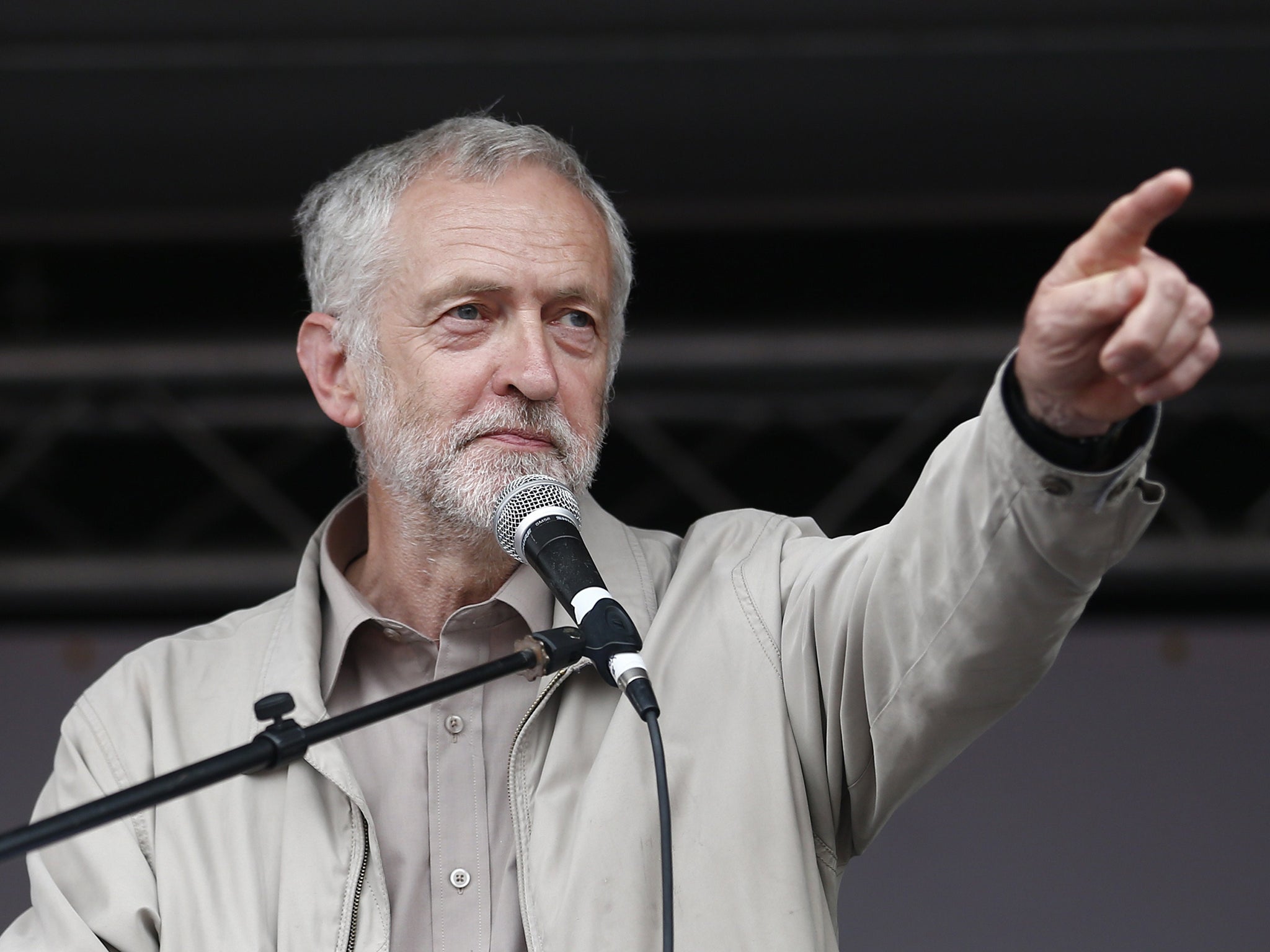
Jeremy Corbyn pledged that the minimum wage will rise to £10 an hour if Labour win the next general election, outstripping the Conservative’s plan for a ‘national living wage’ of £9 by 2020.
Image result for Jeremy Corbyn
 If enacted, it is projected that the proposal would lift the pay of nearly 6 million workers or one in five of the workforce. With the employment rate at a record high but rising numbers of people experiencing in-work poverty, our political parties are right to look beyond the quantity of jobs and think seriously the quality of jobs, including how much they pay.


Nonetheless, an ambitious minimum wage hike is likely to worry many businesses. Over the summer, at least sixteen trade associations wrote to Greg Clark, the business secretary, arguing that the government should “exercise caution” and drop its £9 target for 2020. With productivity in the British economy lagging behind our European neighbours, there are far too many businesses paying low wages who feel like they can’t risk offering a penny (let alone several pounds) more to their employees.

Forthcoming IPPR analysis shows that the UK’s productivity problem is rooted in the UK’s large proportion of low-performing businesses. These firms are characterised by three weaknesses: poor management, a lack of ambition to create high-skill jobs and a slow take-up of new technologies. UK manufacturing firms, for example, have an average ‘management rating’ in international comparisons which is consistently lower than countries such as Germany, Sweden, France and Australia. At the same time, one third of UK employees is overqualified for their current job, the highest rate in the EU-28. Only 83 per cent of businesses in the UK even have a website (compared with, for example, 95 per cent of businesses in Finland). 

The government’s recent Industrial Strategy Green Paper focuses almost entirely on the external business environment - developing skills, upgrading infrastructure - while doing almost nothing to address the fundamental problems within businesses in the private sector. Increasing the minimum wage to £10 an hour will provide a welcome pay boost for the lowest paid, but unless it is combined with a more innovative approach to the way that most of the economy works it is likely to mean that even more than one in five of the workforce is stuck at the legal wage floor. 

Until now, industrial strategy has tended to try and support areas of the economy which have potential for high-growth, such as aerospace, automotive or precision medicine. The sectors and companies where the majority of people work have been ignored. If we want to ensure that the lowest paid get a sustainable increase in their pay, we need a plan to improve productivity and job quality in workplaces across the whole economy. 

Some of this work has begun, through the Productivity Leadership Group led by John Lewis Chairman Sir Charlie Mayfield. The government has provided seed funding for a new Productivity Council bringing together business leaders to engage with the rest of the economy to improve management, innovation, digitisation and work organisation. This work must be central to the UK’s new industrial strategy, and quickly scaled up. In the end it is the only way we can sustainably end the British economy’s addiction to poverty pay.
IPPR is the progressive policy think tank. We develop ideas and answers to the big questions Britain faces, ideas that create a positive vision for Britain.

Japan to test mass telecommute for 2020 Olympics

Japanese commuters will be encouraged to work from home for one day in a nationwide exercise for the 2020 Olympics that authorities hope will ease congestion on roads and public transport.

Japanese commuters will be encouraged to work from home for one day in a nationwide exercise for the 2020 Olympics that authorities hope will ease congestion on roads and public transport.
Image result for japan

Tokyo has declared Jul 24 - exactly three years before the opening ceremony of the summer games - as "Telework Day" and wants firms and government departments to let employees work remotely.


London introduced a similar measure during the 2012 Olympics with 80 per cent of businesses in the city participating, according to Japan's Internal Affairs Ministry, which announced the plan on Tuesday.


Greater Tokyo, with a population of more than 30 million people - about a quarter of Japan's total - is notorious for its packed trains and subways during peak morning rush hours.
The plan is part of Prime Minister Shinzo Abe's efforts to rethink Japan's workaholic tradition, where men routinely spend long hours in the office and little time with their families.


'Islamic' kindergartens in Austria raise eyebrows

A young generation of kindergarteners in Vienna, Austria, may be learning radical Islamic viewpoints, unbeknownst to their parents and guardians, a research study suggests.
"Some 10,000 children aged two to six attend around 150 Muslim preschools, [which teach] the Koran much like Christian ones do with Bible studies," according to religion education professor Ednan Aslan of the University of Vienna and as noted by the global news agency Agence France-Presse. The news agency also reported, "Vienna has 842 registered kindergartens, 100 of them Catholic-run and 13 Protestant, but the number of Muslim ones is not known."
The most important prerequisite for religious education -- and for education in general -- is that the children need to learn to think," he argued, as reported by The Local, an English language publication in Austria. "Islam, as it is now, is not sustainable," he also said recently.
The Islamic kindergarten issue has stirred up controversy in Vienna. Some see Aslan's study as flawed, while others are concerned with the subject matter.
Image result for 'Islamic' kindergartens in Austria raise eyebrows
"[Parents] are unaware that they are shutting [children] off from a multicultural society" when sending them to an Islamic school, Aslan told Agence France-Presse.
Could kindergarten teachers, possibly inadvertently, indoctrinate children into radical thinking or a parallel society? In Indonesia, a group "discovered textbooks aimed at kindergarteners containing 'dangerous radical Islamic teachings,'" Todayonline.com reported in January 2016.
"This could endanger the children's future," said Benny Ramdani of the Ansor Youth Movement, a group associated with Indonesia's largest Muslim community, Nahdlatul Ulama (a traditionalist Sunni movement).
"In its report Ansor noted certain sentences in the book: 'Sahid di medan jihad'[die as a jihadist], 'Rela mati bela agama' [willingly die for religion], 'Hati-hati zona bahaya' [warning, dangerous zone] and 'Bahaya sabotase' [danger of sabotage]," The Jakarta Post noted last year.
While the Ansor Youth Movement found concerns in the kindergarten textbook material, others deny any intention to radicalize the youth through the texts.
The terror group ISIS has through its indoctrination techniques.
"The recruitment of children takes place in several phases, beginning with harmless socialization," German news magazine Der Spiegel says. "Islamic State hosts events in which children are given sweets and little boys are allowed to hold an IS flag."
Der Spiegel continued in a July 2016 article: "Then [the children] are shown videos filled with violence. Later, in the free schools IS uses to promote the movement, they learn Islamic knowledge and practice counting and arithmetic with books that use depictions of tanks. They practice beheading with blond dolls dressed in orange jumpsuits. With a new app developed by IS, they learn to sing songs that call upon people to engage in jihad."

Why Beijing should lead on the North Korean crisis

"The definition of insanity is doing the same thing over and over again, but expecting different results."
The quotation is attributed to Albert Einstein but after a torrid few days on the Korean peninsula, it's one for Chinese leaders to ponder.
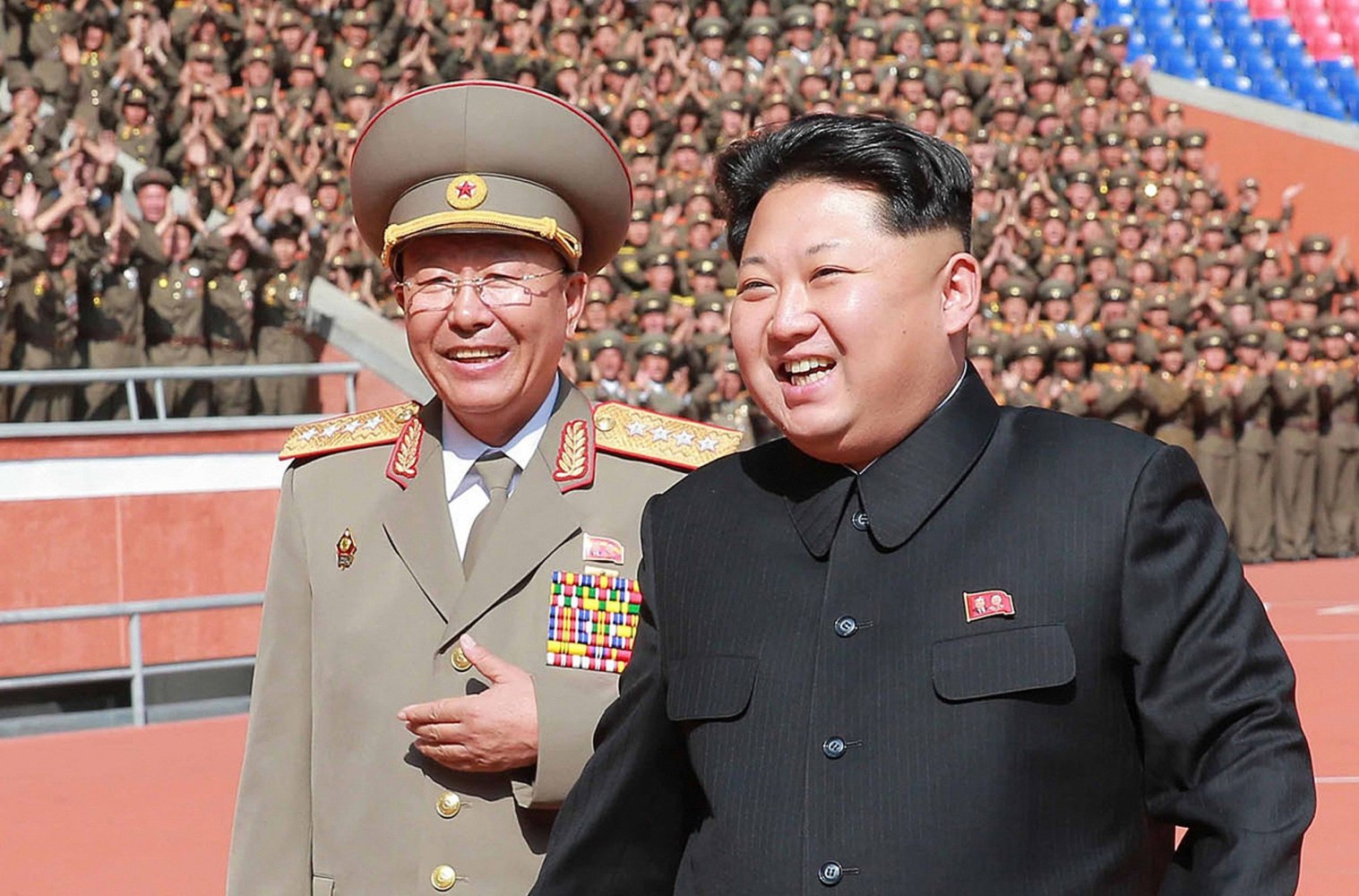
China is simply in the wrong place on North Korea. It is allowing Kim Jong-un's nuclear ambitions to undermine Chinese national interest.Image result for north korea

There are complex reasons for this including history, habit and political culture. But among Chinese foreign policy experts and even on social media, unease is beginning to spread.
North Korea's nuclear programme has already driven South Korea to agree to the deployment of an American anti-missile system, locking Seoul deeper into a defensive triangle with Japan and the United States.
Relations between Beijing and Seoul are at their worst in a quarter of a century and many South Koreans have been alienated by unofficial Chinese sanctions against the whole spectrum of South Korean interests from supermarkets to boy bands.
This is good for North Korea but for no-one else. It is nonsensical for China to punish South Korea for trying to defend itself against a nuclear threat which even Beijing describes as real and urgent.
And if North Korea continues its drive for nuclear weapons, there may be a worse arms race to come. A nuclear-armed Japan would hardly be in China's national interest.
But despite this catalogue of warning signals and failures, China seems trapped in an unfinished history marked by binary choice: a nuclear-armed North Korea or a reunified Korea with American troops on China's border. Between these choices, it finds a nuclear-armed North Korea preferable. But if it thinks hard enough, perhaps there is an alternative.

Nigeria to boost growth with non-oil revenues, anti-corruption war – Adeosun

Nigeria’s Minister of Finance, Kemi Adeosun, has said the nation plans to get out of recession by boosting government non-oil revenues and cracking down on corruption.
Reuters reports that Mrs. Adeosun made the remarks while fielding questions from reporters at the World Bank conference in Washington on Thursday.
Image result for KEMI ADEOSUN
Analysts said the Nigerian government’s anti-corruption war received a boost recently when the government suspended the Secretary to the Government of the Federation, SGF, David Lawal, and ordered an investigation into the allegations of violations of law and due process made against him in the award of contracts under the Presidential Initiative on the North East, PINE.
Similarly, the government also ordered a full scale investigation into the discovery of large amounts of foreign and local currencies by the Economic and Financial Crimes Commission, EFCC, in a residential apartment at Osborne Towers, Ikoyi, Lagos, over which the National Intelligence Agency (NIA) has made a claim. The Director General of the NIA, Ayo Oke, was also suspended.
There are insinuations that these and other funds recovered from similar anti-graft operations would be ploughed back into the economy.
Meanwhile, Mrs. Adeosun said the government will also issue more international debt to pay for infrastructural projects.

Buhari: we’ll unlock oceans, seas potential

President Muhammadu Buhari has said Nigeria will reposition the Nigerian Maritime Administration and Safety Agency (NIMASA) to facilitate economic prosperity.
Image result for NIGERIA SEAPORT
This, he said, will be done by unlocking the huge potential in this country’s ocean and seas.
Buhari spoke yesterday at a three-day conference of the Association of African Maritime Administrations (AAMA) in Abuja.
AAMA is an umbrella body of five African Maritime Stakeholders’ groups, such as Association of Maritime Administrations of Africa, Africa’s Ship Registry Forum, African Ship Owners Association as well as Africa Shippers’ Council and Seafarers’ Forum.
The President urged other African leaders to tap into the huge resources in their oceans to boost the continent’s economic development and provide jobs for their people.
Buhari, who was represented by Vice President Yemi Osinbajo, said the opportunities in the vast oceans surrounding the continent needed to be harnessed to diversify its economy.
The theme of the event is: “Sustainable use of Africa’s oceans and seas”. It was hosted by NIMASA.
Buhari added that there was the need for other African countries to develop regulatory and legal frameworks that will properly manage maritime resources and address the challenges facing the sector.
Leaders of the AAMA, Buhari said, must evolve synergies to reap the benefits of the oceans to ensure socio-economic emancipation of the continent.
The president said:  ”Here in Nigeria, we have taken steps to tackle some of the issues peculiar to us while still calling for regional and sub-regional collaborations. We have set up engagement to resolve and address the misunderstanding and contentious issues in Niger Delta which, off course, is part of Gulf Guinea.
“We recently approved a new maritime security architecture and infrastructure to be jointly coordinated by NIMASA, NSA and FMOT. We have given required support to the Navy so that they can work with others within our sub-region to effectively police our waters to facilitate trade.
“This arrangement will also contribute to resolving and eliminating piracy and sea robbery in our maritime domain on our waters. The results are encouraging and piracy has dropped dramatically, especially in the last six months.“We are making substantive investment to improve human capacity by taking advantage of international trade in the shipping and our maritime industry.
“The measure we are putting in place is to increase efficiency of our port and to enable quick turnaround time of vessels. Technology is also being introduced to make our port operation effective to support economic growth. NIMASA as regulator agency is being reformed to play effective role as a facilitator of economic prosperity.”
Senate President Bukola Saraki, who was represented by Senator Bala Ibn Na’Allah, said NIMASA’s efforts “have led to an upward swing in the level of local participation of Nigerians in the maritime industry and the use of Nigerian waters and seas for lawful economic activities”.
House of Representatives Speaker Yakubu Dogara called for collaboration among African countries to cultivate and reap the benefits of its oceans.
Minister of Transportation Rotimi Amaechi said the African maritime transport charter inspired the formation of AAMA and encouraged information sharing, inter agency collaboration, sub-regional cooperation and approach to planning, implementation and maritime regulation on the principle of inclusiveness and collaboration.
The government, Amaechi said, has stepped up efforts to make Nigeria a deserved maritime hub in the West and Central Africa by embarking on comprehensive port reforms and upgrading port infrastructure as well as linking the ports to the rail network to boost efficiency and quick cargo clearance.
NIMASA’s Director-General Dakuku Peterside called for concerted efforts at tackling Africa’s maritime administration challenges.
Dr Peterside, in  opening remarks at the conference, said: “We are particularly delighted that this conference, the third in the series after the first in Mombasa, Kenya and the second in Sandton, South Africa, is holding on our shores. Nigeria’s place in the maritime world is not only deserved, it is common knowledge.”
“It (Nigeria) is special in the maritime community in Africa for a number of reasons,’’ the director-general said.
He said Nigeria accounted for over 60 per cent of the total sea-borne traffic in volume and value in West and Central Africa.
Secretary-General of the International Maritime Organisation (IMO) Kitack Lim said AAMA should not relent in its determination to increase Africa’s share of global investments in the maritime sector.
Lim, who was represented by an official of the IMO, Mr William Azu, said the maritime sector provided raw materials, food items, employment and transportation of 80 per cent of global trade.

Buhari insists Nigeria is coming out of recession

President Muhammadu Buhari has said that Nigeria is coming out of recession and urged Nigerians to be patient with his administration.
Image result for NIGERIA POVERTY 2017

‎Buhari stated this while making remarks at the inauguration of the North-West zone of the National Committee of Buhari Support Group in Kano on Thursday. He was represented by the Senate Leader, Senator Ahmad Lawan.
“We need to re-strategise, but the planning period is always very difficult in any organisation or nation.
“Already, as you can see, the country is coming out of economic recession, soon the prices of commodities will go down, and generally things will take a good shape.
‎”We call on Nigerians to be patient and not to lose hope.

“I urge us to be prayerful and by God’s grace we shall get better and stronger as a nation,” he said