Thursday

Nigeria: Senate screens Buhari’s ministers

The Nigerian senate will Tuesday (today) in Abuja begin the screening of the first batch of ministerial nominees forwarded to it by President Muhammadu Buhari.
The nominees include Nigerians drawn from across the states and different professions.
President Muahmmadu Buhari met with National Assembly leadership ahead of the screening.
The batch include the spokesperson of the ruling All Progressives Congress, Lai Mohammed; former governors Chibuike Amaechi and Babatunde Fashola; Abubakar Malami; former defence chief, Abdurahman Dambazzau; former governorship candidate in Taraba state, Aisha Alhassan; Adebayo Shittu; former senator, Udo Udoma and Ibrahim Jibril.
Others are Suleiman Adamu; former senator, Chris Nigige; Kemi Adeosun; Ahmed Ibeto and Hadi Sirika.
Also expected to appear before the upper legislative chamber are former PDP chairman, Audu Ogbeh; former Abia governor, Ogbonnaya Onu; NNPC group managing director, Ibeh kachikwu; Amina Mohammed; Solomon Dalong; Suleiman Adamu; and former Ekiti governor, Kayode Fayemi.
PREMIUM TIMES’ national assembly correspondent, Adebayo Hassan, is in the senate chambers and will bring you live updates of the session, expected to kickoff at 10:00 a.m. Nigerian time

Live Updates

Please refresh your browser to get the latest update
9.38. Former Ekiti Governors and APC Chieftains, Niyi Adebayo and Segun Oni, arrived National Assembly to boost Kayode Fayemi’s morale before the Senate during the screening.
Ministerial nominee, Amina Mohammed, arriving the Senate
9.43. Kaduna ministerial nominee, Amina Mohammed, arrives
9.51. APC National Chairman, John Odigie-Oyegun, arrives the National Assembly
10:04 Ahead of the screening session, slated to commence at 11am, the Senate gallery is now filled to the brim, especially by associates and family members of the nominees. Many people are locked out.
10.20. The President of the Senate, Bukola Saraki, and other principal officers of the Senate, arrive.
10:37 Only 10 nominees will be screened today by the Senate. They are: Udoma Udoma, Kayode Fayemi, Audu Ogbeh, Ogbonaya Onu, Osaghie Ehanire, Abdulrahman Dambazzau.
Others are Lai Mohammed, Amina Mohammed, Suleiman Adams, Ibrahim Jibril.
Others are to be screened on Wednesday and Thursday.
11:05: The Kano State ministerial nominee, Abdulrahman Dambazzau and APC spokesperson, Lai Mohammed arrive.
11:45: The Senate went into a closed-door session during which it perhaps considered the reports of its Ethics, Privileges and Public Petitions Committee on petitions against Rotimi Amaechi and Amina Mohammed.
A group, Integrity Group, had submitted a petition against Mr. Amaechi, alleging cases of fraud.
On the other hand, a group, Southern Kaduna Coalition, submitted another petition against Ms. Mohammed, challenging her nomination from Kaduna State, saying she is not an indigene of the state.
11:55: Following the submission of the report of the Committee on Ethics, Privileges and Public Petitions, on the petition against Amina Mohammed, the Senate has ruled that she be a nominee from Gombe State.
South Kaduna Coalition had forwarded the petition challenging her nomination from Kaduna State.
11.48 APC leaders, led by John Oyegun, and Presidential Advisers on NASS, Ita Enang and Kawu Samaila allowed into the Senate Chamber following Senate vote.
11.53. Udo Udoma now being screened.
12: 05: “I can assure Nigerians, if I am confirmed by this Senate, I’ll perform in that onerous task,” Udoma addressing the Senate.
He claims to have sufficient experience in both private and Public sector to perform. He said he would not be going into government to learn.
12:08: Senators asked Mr. Udoma, former chief whip of the upper chamber, to bow and go. He exited.
12: 10: Former Ekiti Governor, Kayode Fayemi, moves in for screening. He is currently talking about his antecedents.
12:12: Mr. Fayemi talked about his work in journalism, academics, governorship of Ekiti state, and contribution to the victory of the APC in the last elections.
12: 15: Senators Sola Adeyeye, Shehu Sani and Andy Uba asked the nominee questions about his stewardship in Ekiti State, especially the allegation that he left a heavy debt burden for Ekiti state, and that he spent billions building a magnificent Government House.
He was also asked about his operation of an illegal radio, Radio Kudirat, during the Abacha days, and why he escaped Nigeria through unconventional borders.
12:20: Mr. Fayemi answered, saying he served well and that the Government House he built is for the people of Ekiti. He said he built the complex because the state never had a befitting Government House. He said at N2.5 billion, it’s perhaps the cheapest Government House in Nigeria today.
“I’m not given to irresponsible behaviour,” he said.
12:37: Answering a question, Mr. Fayemi said when he took over in Ekiti, the internally generating revenue was N109Million a month. He said he was able to raise that to between N500million to N600million per month. He said following the economic crisis that hit the country in the dying days of his administration, the IGR fell to about N350 to N400million a month.
Mr. Fayemi said majority of Nigeria’s graduates have no work place skills.
Reporter Adebayo Hassan filed this additional reports on Fayemi:
Kayode Fayemi is faced with questions that bordered on his tenure as Governor. Chief Whip, Olusola Adeyeye, asked to clear the allegation that he spent “untoward amount” on the renovation of the Government House at the expense of public welfare and also that of leaving a heavy debt burden for his state.
His response:
On debt, he said he met obligations in excess of 30bn naira when he became governor in 2010. He said he had to complete his predecessor’s project before he moved on to commence his original promises and programmes.
With low allocation from the federation account, he had to look for ways of raising funds, particularly from the capital market and multilateral development agencies. He said he raised 25bn from the capital market and “the results are there to see”.
“I borrowed but not in rank of the figure being bandied around.” No country exists without borrowing, he said. He said his most profound legacy was the social security safety programme which gave N5,000 to indigent people monthly.
On the renovation of the Government house, He justified the action, saying Ekiti for 19 years did not have a befitting Government House.
He denied buying 50million naira bed for Ekiti Government House and challenged anybody to bring evidence to the contrary.
Responding to Shehu Sani, he said he had never gone out of Nigeria through non conventional borders.
12: 55: Mr. Fayemi was asked to bow and go
12: 56: The next nominee – Audu Ogbeh – comes in and is introducing himself. He described himself as “a farmer who has interacted with some of you in the past”.
He said most of Nigerian universities have become intellectual ghettos.
Reacting to criticisms of his nomination, Mr. Ogbeh said he was before the senate not because he wanted anything new, but because President Buhari asked him to serve in his cabinet. “I wouldn’t be here if I don’t believe I can do it.”
“For a party to surrender authorities to the President or governors, at state levels, is harmful”
“Since I left office in the Second Republic as minister, I have been in school, not in any classroom but in the school of life, travelling around the world and exploring agriculture, why we are failing where others are succeeding”.
It must be said that Mr. Ogbeh, with facts, statistics and elucidation, clearly dazzled the senate.
1: 14: Godswill Akpabio moves a motion that Chief Audu Ogbeh, being a donation by the PDP, should take a bow. Mr. Ogbeh bowed and moved out.
1:16: Next nominee, former Abia Governor, Ogbonnaya Onu, enters the chamber, and bowed before senators.
Mr. Onu says, “there are too many abnormalities in our country”.
Senator Gaya says Mr. Onu was his colleague as governor in 1992, and that he had accomplished so much that he should be allowed to bow and go.
But Senator Goje said the nominee should answer a question about the widespread unemployment in the country before bowing and going.
Responding Mr. Onu said Nigeria needs to be a producing and manufacturing concern if it wants to solve the problems of unemployment. he said Nigeria is a consumer nation, and that that should not be so.
“We need to produce more in the areas of agriculture, solid minerals and services…,” he said.
Reporter Jaafar Jaafar sent in below additional report on Mr. Onu
The fourth nominee, Ogbonnaya Onu, said Nigeria is a rich nation and there was no reason Nigerians should be poor.
He said the nation was facing challenges, noting that if senators confirm him, he would join hands with Nigerians to change the situation.
He made a very brief remark.
Senator Kabiru Gaya said Mr. Onu as a former governor, a former national chairman who made distinctions in his education from the basic level to the advanced level, he should take a bow and go.
Mr. Onuh called for diversification of power generation in the country, saying Tanzania had shut its hydro power stations duee to paucity of rainfall. “Power is central to many of the things we are going to do in this our great country,” he said.
He said Nigeria’s coal was one of the best in the world because of its loe sulphur content, and so it should be harnessed to generate enough power and industrialise the country.
On unemployment, he said production capacity should be improved to make job opportunities in the country.
On non-inclusion of youths, he said he didn’t see the full list of the nominees to ascertain wether youths were included.
He was asked to take a bow and go.
1:36:  Next  nominee is Dr. Osagie Ehanire from Edo State. He described himself as the first of the non mainstream figures that will appear for screening.
Mr. Ehanire said he had worked to enthrone Buhari as President since 2003 because he shared his vision, commitment and patriotism.
Senators are asking him what he would do to fix Nigeria’s health sector if appointed minister of health, especially in the areas of poor diagnosis, efficiency in service delivery and training.
Responding, Mr. Ehanire proposed training and retraining of all actors in the health sector, a review of curriculum of health-related schools. He also proposed peer review of diagnoses by other doctors.
The doctor said Nigeria has to design its own health models, not copy models simply because they had worked elsewhere.
The nominee said it is unethical for doctors in public service to open private hospitals and then divert patients there. He said a process would be put in place to draw the line on what doctors can and cannot do.
2: 14: Senator Godswill Akpabio said as governor, he built the biggest hospital in West Africa. His colleagues could be heard challenging him why he did not seek treatment there if the hospital was that great.
2.19: The Senate Leader, Ali Ndume, reminded the Senate that there were still five nominees awaiting screening, thereby calling for limit to questions.
2: 22: Mr. Ehanire was asked to bow and go.
2: 25: Enters the next nominee – Abdurahman Dambazau, retired lieutenant general and former chief of army staff. He is reading his CV- detailing his career history and accomplishments
Mr. Dambazau says he relaxes by listening to soft English music and traditional Hausa music.
The nominee also debunk the claim by a senator that Nigeria has no defence policy, saying he was indeed contacted some months ago to be part of a committee to review the document.
3:12: Mr. Dambazau said Nigeria should identify particular grazing land for cattle herders towards maintaining the nomadic culture and avoid clash with farmers.
Another challenge, according to him, is the fact that Fulani move around West African subregion, sometimes because of their large population.
He said public private partnership should be considered for  the Defence Industries Corporation of Nigeria (DICON). He believes the private sector should be involved in arms manufacturing while DICON acts as watchdog.
“I was passionate about the welfare of the military, a reason I came up with the idea of establishing new barracks like the Abacha Barracks,” Mr. Dambazau said.
3:25: Spokesperson for the ruling APC, Lai Mohammed, is the next nominee before the Senate.
He said, “Four years is a short time to learn the rope in opposition. You may have to stay there a little longer.”
He said, “In government, we (APC) will not be as harsh as you (PDP) were to us while we were in opposition.”
Senator Akpabio said, “If I know the nominee very well, I know he will like to drop some propaganda before he leaves.”
In his closing remark, Mr. Mohammed said if confirmed minister, he would be as committed and patriotic as he was in opposition.
Mr. Mohammed’s appearance had the shortest time-span so far, and it was laughter all through while it lasted.
Reporter Jaafar Jaafar filed below additional report on Lai Mohammed’s appearance
Rowdy session as Lai Mohammed takes the podium. The senators break his speech intermittently to laugh or object to his remark.
Lai Mohammed admits he might have ruffled some feathers in the course of his job as spokesperson of political parties in the last 10 years.
He said he would be more comfortable to serve in government. “I stand before you to seek your support to be confirmed as minister,” he said.
The minority leader, Godswill Akpabio, said Lai Mohammed should drop one or two propaganda before he is allowed to go.
When the Senate president called for order, Mr. Lai spoke again, saying he would serve the nation diligently to the best of his ability.
“If I am screened, I will be as passionate, committed and patriotic as I was when I was in the opposition,” he said.
He was asked to take a bow and go.
3:41: Next nominee is Amina Mohammed. She steps into the chamber and bowed to senators several times. She then spoke about her career history and accomplishments, working in the public and private sectors, and later at the United Nations.
Ms Mohammed was asked to bow and go as she was answering the questions put to her about her stewardship as presidential assistant on MDGs.
Responding to questions, Ms. Mohammed  said conditional grant scheme was a good initiative if it would be applied towards improving healthcare, education, water supply, etc.
The seventeen Sustainable Development Goals, SDGs, would succeed the Millennium Development Goals, MDGs, as the UN’s chief initiative for advancing basic living standards in the world and addressing a range of issues, including armed conflict, climate change, and equality.
According to her, the Sustainable Development Goals, SDGs, are a set of seventeen goals comprising 169 targets and indicators for reducing poverty and improving environmental sustainability.
She spoke at length on development issues, with some interruptions from the senators – obviously complaining about the length and intellectual depth of the speech.
She was then asked to take a bow and go.
4:04: Next nominee is Suleiman Adamu, from Jigawa state.
He narrated his long-standing relationship with President Muhammadu Buhari.  Among others, he said he had been part of Mr. Buhari’s think tank since the latter’s foray into politics in 2002.
04: 26: Suleiman Adamu emphasised the need by the Federal Capital Development Authority to commit resources to the development of Abuja satelite towns.
Responding to questions, Jigawa State nominee, Suleiman Adamu said APC manifesto was clear about the employment challenges in the country.
“We have to improve on training and skill acquisition so that people should become employable,” he said.
He added, “Adequate and potable water supply, I have noticed neither the federal government nor the state government is investing water infrastructure.
“Water quality should be enhanced by establishing treatment plants as frequent drilling borehole is to the detriment of ground water available.”
He said the FCDA should shift focus to satellite towns towards ensuring the security and development of the areas. He said the Abuja satellite areas were eyesores.

Wednesday

How Jeff won 2015 MTN Project Fame

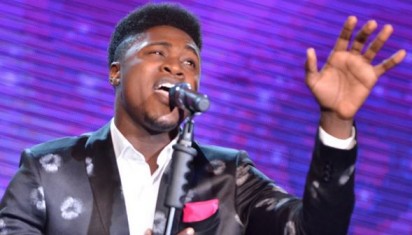
Budding singer, Jeffrey Ufedo Akor  weekend emerged winner of the MTN Project Fame West Africa Season 8, smiling home with star prize of N5million, a brand new, fully loaded SUV and a recording contract worth millions of Naira. It has been a completely exciting season with weeks of hard-work and dedication.
Jeff
Jeff
It started with auditions in several cities in West Africa, and translated into eight weeks of fun, tension and scintillating performances for the 16 contestants that made it into the Academy.
For the six finalists that made it to the finals (Ada, Arewa, Anderson, Deinde, Jeff, and Pearl), things will never be the same again as they have indeed gone through a beneficial and life-altering eight weeks in the Academy.
Grand Finale nights like this have birthed the likes of Iyanya, Mike, Chidinma, Monica, Ayoola, Olawale and Geoffrey. And with only one of these six to join the league of extraordinary superstars, the question on everyone’s mind was, who will it be?
But before it got to that, the show kicked off on a  promising note as the six finalists stepped onto the stage in their monochrome outfits and delivered a melodious, yet emotional group song titled ‘Pray For Me’ by Dare Art Alade.
The rest of the night turned out to be an exciting journey with great entertainment lined up in form of collabos. Yes, the six finalists had been paired up with some A-list artistes to produce amazing remixed versions of their songs, and so each team stepped on stage and brought nothing but pure joy as they sang, danced and glowed.
First to perform were Jeff and energetic Yemi Alade doing ‘K.I.S.S.I.N.G’ remix. Followed by Pearl and Chidinma who gracefully performed ‘Kedike’ remix. Deinde and Iyanya got everyone dancing with ‘Mr Oreo’ remix.  Anderson and Praiz with their vocal dexterities delivered ‘Rich and Famous’ remix. While Arewa and 9ice paired up for the remix of the evergreen ‘Gongo Aso’.
Ada and Sound Sultan closed this round of entertainment with their creative rendition of ‘MotherLand’ remix. Amazingly, these collaborations are now available as caller ring back tunes. It was then time to get down to the business of the day. The moment of truth as many calls it, often characterized by a pin-drop silence.
With the audience eyes wide open, gasping heartbeats and trembling feet, the hosts of the show –Joseph Benjamin and Bolanle Olukanni took turns to announce the winner and runners-up of season eight.  Ada Tosanwumi, third runner-up. She went home with a cash prize of two million naira while   Anderson Amos emerged second runner-up.
He walked away with two million naira and a brand new saloon car. Pearl Awa-Agwu, first runner-up. She earned three million naira and a brand new saloon car.
With scores of spectacular performances and several millions of votes; the winner of MTN Project Fame Season eight is Jeffrey Ufedo Akor. He carted away five million naira, a brand new, fully loaded SUV and a recording contract worth millions of Naira. The sixth and fifth positions will also be rewarded with five hundred thousand naira and one million naira respectively.

Crude oil transportation contracts help cut cost – experts

The federal government’s decision to award marine transportation contracts for crude oil movements from terminals to the refineries is not only cost effective but equally in tune with best environmental practices.
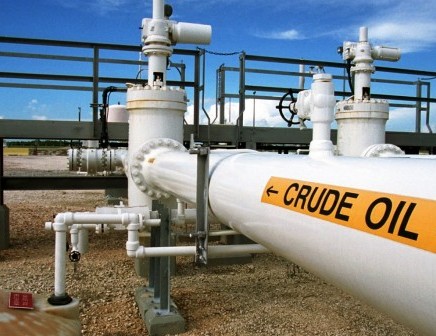
crude-oil-pipe-702x336-436x336This was the verdict of oil experts in response to a publication on an online news media, Premium Times, that claimed in its reports that the crude oil transportation contracts awarded under former president Goodluck Jonathan to PPP Fluid Mechanics(PPPFM) and its sister company, Ocean Marine Solutions Ltd(OMS) owned by Captain Hosa Okunbor and Dr. Tunde Ayeni respectively was fraudulent.
But industry experts informed that the International Oil Companies (IOCs) operating in Nigeria and the state oil firm, the Nigerian National petroleum Corporation (NNPC) regularly face attacks on their production or transportation assets since an insurgency began in 2006 by armed militants campaigning for increased local share of the oil producing area (or Niger Delta’s) wealth.
According to them organized crime groups are drilling into the pipelines — in turn used to transport crude, gas and condensate — to tap oil into barges for local refining or for sale to vessels waiting offshore.
About 240,000 barrels per day of crude, close to what spilled in 1989 when the Exxon Valdez tanker ran aground off Alaska, leak in the Niger Delta where some of Earth’s most lucrative oil deposits exist.
To bypass this daunting security and environmental challenges, the NNPC in December 2010 awarded a contract to PPP Fluid Mechanics (PPPFM) and Ocean Marine Solutions Limited (OMS) for the transportation of oil by marine vessels from the Escravos terminal to Warri refinery through an international competitive bidding exercise that included 13 other companies.
Nigeria’s Warri and Kaduna refineries had been shut for 48 months before the engagement of PPPFM due to a lack of supply of crude oil feed stock.
Using the existing pipelines had become uneconomical for the NNPC which spent an average of $121 million to maintain and repair the Escravos to Warri broken crude oil pipeline that had an unusually high and environmentally damaging 40 percent loss of crude oil pumped through it.
IOCs had previously borne the brunt of the sabotages but now it was equally beginning to hit the Nigerian economy.
Shell’s former CEO, Peter Voser, mentioned in 2013 that the company had “seen a marked escalation in security problems and theft in Nigeria in 2013,” which could lead to a loss of “$12bn for the Nigerian government on an annualised basis”.
The Nigerian economy, with more than 170 million people grew at around 7 percent annually, between 2010 and 2014; however energy constraints remain the major hurdle that could hold back future growth.
The NNPC says maintaining vital energy supplies was the major reason for the PPPFM contract for transportation of crude oil using marine vessels awarded at a cost of $3.87 per barrel. A separate dedicated surveillance contract for the provision of six security boats was awarded to OMS for an average cost of $1.5 per barrel.
Within the delta, about 5,280 oil wells are linked by 7,000 kilometres (2,700 miles) of pipelines.
“It is perhaps not well understood by outside observers how diverse and complex the region is. There are about 40 different ethnic groups speaking 250 languages and dialects, living in over 13,000 settlements. According to GTZ estimates based on National Population Commission data, the overall population of the Niger Delta stands at over 30 million people and is expected to exceed 45 million people by 2020,” Ildar Davletshin, an oil and gas analyst at Investment Bank, Renaissance Capital, said in a May 2014 report.
Once-rich alluvial soils of the delta are however no longer viable for crops as more than a half-century of oil production and related damage continue to take a toll.
The amount of spoiled water has grown with discoveries of cadmium, lead, chromium and nickel in dozens of Delta Rivers above “maximum contaminant levels” set by the U.S. Environmental Protection Agency, according to a 2010 study by the Environmental Chemistry and Toxicology Research Unit of the Nnamdi Azikiwe University in the Southern city of Awka.
A report in 2011 by the United Nations Environment Programme found measurements of the carcinogen, benzene, in Niger Delta water wells surpassed World Health Organization recommendations.
To help reverse some of these damaging environmental issues as well as manage its resources better, the NNPC invited PPPFM and OMS to widen its operations to cover the much larger 210,000 barrels a day Port Harcourt refinery (where pipeline losses are estimated at 70 – 80 percent), with new mandates that included offshore sea protection, offshore compulsory terminal pilotage, and dedicated security surveillance.
The enlarged contract was undertaken at a cost of $5.68 per barrel, according to data from the NNPC.
Checks show that the transportation contracts with PPPFM and OMS are favourable when compared to North America, where crude oil is mostly transported by pipelines or rail.
Across North America (USA and Canada) it costs as high as $21 per barrel of oil on rail, compared to $7 via pipeline, according to data from Platts, an American based provider of energy and metals information.
From 2011 to 2015 a total of 65.59 million barrels of crude oil have been delivered to Nigeria’s refineries by PPPFM and OMS.
Nigeria is estimated to have saved up to $3.2 billion from the PPPFM/OMS intervention, based on a calculation of between 40 and 80 percent loss, if the crude oil was pumped through the pipelines.
The cost savings from a lack of environmental degradation are probably ten times more.
Analysts admit that the oil transport deal are complex because it addresses both the security and the transportation risks but that it helped to halt huge losses that Nigeria had suffered as a result of pipeline vandalisation and the huge drop in production and crude oil supplies to the refinery.
“This complexity may well explain the ignorance of those who have been writing to suggest that the deal was favoured by the past administration,” said one oil industry operator.
Many informed sources said that the domestic crude oil transportation deal was purely a business transaction involving a sovereign state corporation and private sector operators who had the capacity to deliver on the deal.
“I can tell you that both PPPFM and OMS took calculated business risk. They could easily have gotten their fingers burnt because at the time they entered the transactions not many were willing to touch it.
“It is sad that the crude oil transportation contract that has benefitted the nation immensely is now being misinterpreted, misrepresented and described as fraudulent by people who are acting on ignorance and bringing the names of the company promoters, Captain Hosa Okunbor and Dr. Tunde Ayeni to disrepute” another analyst said.

Alaibe withdraws from APC Bayelsa guber primary

Former Managing Director of Niger Delta Development Commission NDCC, Timi Alaibe has withdrawn from the primary of the All Progressives Congress in Bayelsa State.
Alaibe in a statement issued in the early hours of Wednesday said the decision to withdraw from the contest was in the interest of the party especially as it face the task of the common challenge of unseating the PDP in the state come December 5
He said, “It is with all nostalgia that I recall the zeal, enthusiasm and hope with which thousands of Bayelsans made a statement in the direction of change in August, 2015. I can also vividly recall a mental replay of the occasion wherein a qualitative representation of the leadership of our great party, the All Progressives Congress ( APC) ushered in respected leaders and members from their then party, Peoples Democratic Party ( PDP) .
“That singular event has been phenomenal just as its true meaning and direction have all exuded confidence, unity of purpose, cohesion, collectivism and courage. That day undoubtedly marked the beginning of a people’s journey from hopelessness and squandry as enunciated by the accidental PDP-led ‎government in Bayelsa state to that of quality leadership that an APC government will represent.
File: APC chairman, John Oyegun receiving  former NDDC chairman Timi Alaibe and others into the APC yesterday in Yenagoa.
File: APC chairman, John Oyegun receiving former NDDC chairman Timi Alaibe and others into the APC yesterday in Yenagoa.
“As one of such leaders who took that historic decision, I thought of giving a further bite to my burning desire to extricate the state from‎ abysmal leadership failure. Therefore, my aspiration to be governor after series of consultations was to rekindle our collective hope and lift the state beyond its current state of decay under the PDP.
“Regardless, I am not oblivious of the fundamental fact that we all need a virile, united, cohesive and collaborative APC to bring about our desires to fruition. Not only do we need this, APC deserves every sacrifice, including personal interests, to arrive at the envisaged destination come February, 2016.
“This is more so that both as individual leaders and as a party, the need to avoid the a situation of crisis that the PDP might inadvertently reap from cannot be over emphasised.
“As a result, having carefully examined the circumstances that have trailed the Governorship primaries of our great party in Bayelsa state, I have come to the conclusion that pushing my governorship ambition beyond this point carries alongside it some collateral consequences.
“Succinctly, two options are available to me. Whereas I am confident that I have the required support of my admirers and supporters‎ as well as the needed backing of Bayelsans to govern them, the hurdles set on the way of this noble project are seemingly temptous and capable of overheating the APC in Bayelsa.
“In another vein, the virtuous path to take is that virtuous one in which personal interest are sacrificed for the common good,whether for the APC or the state in general. This is the path I chose in the light of the prevailing circumstances. I therefore withdraw from the governorship primary contest.
“This decision is taken in the interest of our party especially as we face the task of the common challenge‎ of unseating the PDP in the state come December 5.”

Ahead of October 31 deadline: 32m account holders yet to register for BVN

The Central Bank of Nigeria (CBN) has said that 32 million active bank accounts have yet to be enrolled on the Biometric Verification Number (BVN). In a statement in Abuja weekend, Alhaji Mu’azu Ibrahim, CBN Director, Corporate Communications, said CBN was concerned by the number of account owners yet to enrol, considering that the exercise would end by October 31.
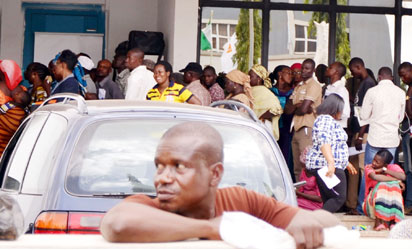
Customers besiege banks as BVN registration deadlines expires
CBN in collaboration with all banks in Nigeria on February 14, 2014, launched the BVN, which is a centralised biometric identification system for the banking industry. It aims at addressing issues of identity theft and fraud and will help to discover blacklisted customers, reduce queues in banking halls and standardise efficiency of banking operations.
The CBN also said the BVN would encourage banks to grant loans to Micro, Small and Medium Enterprises (MSMEs) and students in the country. “One of the most potent arguments advanced by banks for not extending enough credit to prospective credit customers in Nigeria has been the absence of credible identity system. Thus, it was agreed that the scheme would make access to credit easier for low income earners in the society,” the Apex bank said.
The CBN had initially put the deadline of BVN registration at June 30 but postponed it to Oct. 31 because of low enrolment. According to the statement, after 18 month of the exercise, empirical evidence shows that a good number of bank customers are reluctant and have not taken the exercise seriously.
“The emerging statistical trend of the BVN registration exercise shows that there are about 52 million active bank accounts in various banks. Out of this, total enrolment stands at about 20 million, out of which about 14 million accounts have been found linked to the BVN as at September, 2015. The question now is whether bank customers have been taking advantage of the extension to complete their BVN registration and also ensure that their various bank accounts have been linked to the BVN,” it stated.
The statement revealed that after the initial rush from June ending to July, there had been a steady decline in new BVN enrolment figures for August and September. It stated that the development indicated that many bank account holders had continued to show apathy instead of taking advantage of the extension period to complete the registration.
“Bank customers are urged to take advantage of the remaining time to complete the registration. This is so as to avoid the commotion and melee experienced at various banking halls in the month of June. The CBN has made it clear that there would not be further extension after the October 31, 2015 deadline,” the statement said.
It said this meant that customers without the BVN-linked accounts might risk being restricted from normal operations of their accounts or access to their bank account balancesthat for about 52 million  active  bank  accounts  in various  banks,  total  enrolment  stood at about 20 million, out of which,  about 14 million accounts  have been  found  linked to the BVN as at  September, 2015,” the source said.
The CBN,  in collaboration with the Bankers’  Committee,  introduced the Bank Verification Number  (BVN)  on February 14, 2014 to create a unique  identity for all bank customers and other users of financial services in the country by the use of the customers’ biometrics as means of identification.
It was originally meant to last for 18 months, terminating on June 30, 2015. However, at the expiration of the estimated  18  months after the launch,  empirical evidence showed  that a good number of bank customers  were reluctant and  never took  the  exercise  seriously. Thus, few days to the end of the mandatory 18 months,   there was commotion and stampede  in  banking halls across the country,  as customers tried to beat the deadline for  the  BVN registration.
This  confusion  necessitated the call for the extension of the registration dateline by four months to October 31, 2015.  What is required is for bank customers to  visit any branch of their banks and the desk officer  would capture  their finger  print  and  a  photograph of  their face,  their   signatures  and  present a photocopy of  either  a driver’s license, national identity  card or international passport.
One of the excuses by banks for refusing to extend credit to prospective credit customers in Nigeria has been  the absence of credible  identity  system.  Thus, it was agreed that  the scheme would make credit access to  low income earners easier, especially operators of  Micro,  Small and Medium Enterprises, MSMEs, and even students.

Ministerial List: President Buhari appoints self as Petroleum Minister

Anti-Saraki senators protest as 83 senators pass vote of confidence on Senate President

Embattled President of the Nigerian Senate, Bukola Saraki, who is facing trial at the Code of Conduct Tribunal over alleged corrupt practices, got a morale booster Tuesday as 83 of his colleagues gave him a stamp of approval.
Bukola Saraki in the accused box of the Code of Conduct Tibunal
The names of the senators said to have co-sponsored the motion were not read on the floor of the Senate.
But some senators protested the endorsement, saying the processes adopted in moving it were faulty and that the motion violated the upper chamber’s standing rule of not dabbling in matters before a court of law.
David Umaru (APC-Niger East), who read the vote-of-confidence motion, said the proposal was initially sponsored by 84 senators but that the Chairman, Senate Committee on Business and Rules, Babajide Omowarare (APC-Osun East) asked that his name be removed from the list.
In dissociating himself from the motion, Mr. Omoworare said, “Ordinarily, by virtue of my position as the Chairman, Commmittee on Business and Rules, I should have seen this motion before now.
“But it comes as matter of urgent public importance. My name is listed as number 11. Let me say that I don’t know how my name got into the list. I therefore say I am not part of it.”
In spite of the lawmaker’s protest, Mr. Umaru proceeded to move the motion.
He argued that the Nigerian Constitution guaranteed separation of powers and condemned what he described as the “ongoing unwarranted media embarrassment of the Senate and the Senate leadership”.
He urged Nigerians not to allow themselves be used to harass or intimidate the leadership of the Senate.
Supporting the motion, Sani Yerima (APC-Zamfara Central), said “we shall continue to support our leaders”.
According to him, the lawmakers’ right to choose their leadership should be respected.
He added that “anybody outside this chamber who wants to control the Senate should go and sleep”.
The motion was later passed by a voice vote.
But no sooner than that was done that the chamber descended into pandemonium.
Kabir Marafa, a staunch opponent of the embattled Senate President, was so incensed by the motion and the proceedings on the floor that his reaction almost disrupted the session.
He vociferously criticised the motion, arguing that it should not have been entertained in the first place.
Mr. Marafa wondered why issues surrounding Mr. Saraki’s corruption trial was entertained as a motion even while the matter was still pending in courts.
The Senate has a standing rule barring it from discussing matters pending in court.
For minutes, a visibly livid Mr. Marafa engaged Mr. Saraki in heated argument, with both lawmakers talking back at each other.
However, the duo of Senators Gbenga Ashafa and Sola Adeyeye saved the legislative body from what would have been another violent session.
They calmed Mr. Marafa down and then persuaded him to leave the chamber. They then escorted him out of the chamber.
The Nigerian government had last week, on the recommendation of the Code of Conduct Bureau, arrainged Mr. Saraki before the Code of Coduct Tribunal over charges relating to false assets declaration and operation of foreign account while he served as governor of Kwara State between 2003 and 2011.
Mr. Saraki had said in his preliminary statement said he was arraigned and being persecuted because he emerged Senate President contrary to the wishes of his party.

Buhari appoints petroleum minister, to name other ministers Wednesday

President Muhammadu Buhari on Tuesday named Nigeria’s petroleum minister. And that is himself.
Mr. Buhari said he would personally head the Ministry of Petroleum Resources in the new cabinet.
President Muhammadu Buhari first day in Aso Rock ... STATE HOUSE PHOTO
Addressing some select reporters in New York on Tuesday, after addressing a Global Leaders’ Summit on Countering ISIL and Violent Extremism, the President said: “I wil remain Minister of Petroleum.
“I will appoint a minister of State for Petroleum”.
According to him, this step is being taken as part of efforts to sanitise Nigeria’s oil industry, which is said to be plagued by corruption, massive fraud, and crude oil theft.
Mr. Buhari restated his determination to sanitise Nigeria’s oil industry and free it from corruption and shady deals.
He said that the first step in this direction had already been taken with the appointment of a new management for the NNPC and its subsequent reorganisation.
The President said the prosecution of those who misappropriated NNPC’s revenue under past administrations would soon commence.
On Corruption, he pledged that the federal government will fight corruption, because it has been identified as the root of all problems hindering Nigeria as a nation.
Former President Olusegun Obasanjo, for most part of his tenure, was also the minister of petroleum.
Mr. Buhari had promised to name his cabinet before the end of September.
Since Wednesday is the last day of the month, the President is widely expected to forward names of his minister to the National Assembly today.
Names forwarded to the National Assembly would be screened and approved by the Senate before they are sworn in.
Already, the President of the Senate, Bukola Saraki, has indicated that the screening of the ministers would be thorough and comprehensive.
Mr. Saraki gave the hint while welcoming senators to plenary in Abuja after a long recess.
He said that screening of the nominees would be in-depth to ensure that only competent and qualified individuals only occupied the positions.
“As we await the list of ministerial nominees this week, we are prepared to treat the screening with dispatch but with thoroughness,” the Senate President said.
“I believe the presence of ministers will create the space for greater policy engagement with the executive arm of government.
“I want to urge you all my colleagues to ensure that what is uppermost in our minds as we begin the constitutional task of screening of ministerial nominees is the overall interest of our country.”
He added, “Once the list is submitted, let us ensure that we treat it with dispatch and thoroughness. We must not be held down by unnecessary politicking.
“The enormity of our national challenges at this time does not give room for pettiness or politics of vendetta.”

Monday

10 Cars You Should Avoid Buying

SCION IQ

scion-iq


smart-for-two

vauxhall-adam


Chevrolet-Spark


dacia-duster

hyundai_i10


Dodge-Grand-Caravan


mitsubishi-mirage


Mini-Countryman


Volkswagen-Beetle