Wednesday

How Jeff won 2015 MTN Project Fame

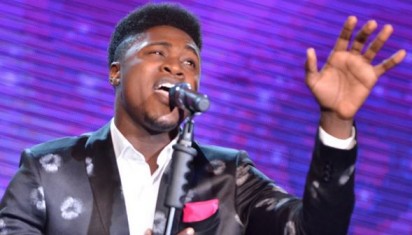
Budding singer, Jeffrey Ufedo Akor  weekend emerged winner of the MTN Project Fame West Africa Season 8, smiling home with star prize of N5million, a brand new, fully loaded SUV and a recording contract worth millions of Naira. It has been a completely exciting season with weeks of hard-work and dedication.
Jeff
Jeff
It started with auditions in several cities in West Africa, and translated into eight weeks of fun, tension and scintillating performances for the 16 contestants that made it into the Academy.
For the six finalists that made it to the finals (Ada, Arewa, Anderson, Deinde, Jeff, and Pearl), things will never be the same again as they have indeed gone through a beneficial and life-altering eight weeks in the Academy.
Grand Finale nights like this have birthed the likes of Iyanya, Mike, Chidinma, Monica, Ayoola, Olawale and Geoffrey. And with only one of these six to join the league of extraordinary superstars, the question on everyone’s mind was, who will it be?
But before it got to that, the show kicked off on a  promising note as the six finalists stepped onto the stage in their monochrome outfits and delivered a melodious, yet emotional group song titled ‘Pray For Me’ by Dare Art Alade.
The rest of the night turned out to be an exciting journey with great entertainment lined up in form of collabos. Yes, the six finalists had been paired up with some A-list artistes to produce amazing remixed versions of their songs, and so each team stepped on stage and brought nothing but pure joy as they sang, danced and glowed.
First to perform were Jeff and energetic Yemi Alade doing ‘K.I.S.S.I.N.G’ remix. Followed by Pearl and Chidinma who gracefully performed ‘Kedike’ remix. Deinde and Iyanya got everyone dancing with ‘Mr Oreo’ remix.  Anderson and Praiz with their vocal dexterities delivered ‘Rich and Famous’ remix. While Arewa and 9ice paired up for the remix of the evergreen ‘Gongo Aso’.
Ada and Sound Sultan closed this round of entertainment with their creative rendition of ‘MotherLand’ remix. Amazingly, these collaborations are now available as caller ring back tunes. It was then time to get down to the business of the day. The moment of truth as many calls it, often characterized by a pin-drop silence.
With the audience eyes wide open, gasping heartbeats and trembling feet, the hosts of the show –Joseph Benjamin and Bolanle Olukanni took turns to announce the winner and runners-up of season eight.  Ada Tosanwumi, third runner-up. She went home with a cash prize of two million naira while   Anderson Amos emerged second runner-up.
He walked away with two million naira and a brand new saloon car. Pearl Awa-Agwu, first runner-up. She earned three million naira and a brand new saloon car.
With scores of spectacular performances and several millions of votes; the winner of MTN Project Fame Season eight is Jeffrey Ufedo Akor. He carted away five million naira, a brand new, fully loaded SUV and a recording contract worth millions of Naira. The sixth and fifth positions will also be rewarded with five hundred thousand naira and one million naira respectively.

Crude oil transportation contracts help cut cost – experts

The federal government’s decision to award marine transportation contracts for crude oil movements from terminals to the refineries is not only cost effective but equally in tune with best environmental practices.
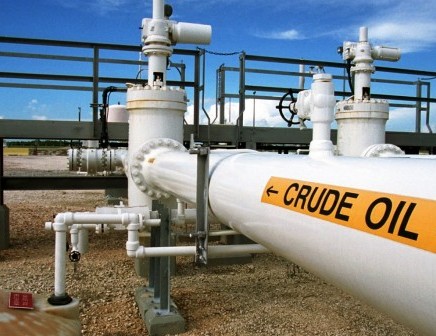
crude-oil-pipe-702x336-436x336This was the verdict of oil experts in response to a publication on an online news media, Premium Times, that claimed in its reports that the crude oil transportation contracts awarded under former president Goodluck Jonathan to PPP Fluid Mechanics(PPPFM) and its sister company, Ocean Marine Solutions Ltd(OMS) owned by Captain Hosa Okunbor and Dr. Tunde Ayeni respectively was fraudulent.
But industry experts informed that the International Oil Companies (IOCs) operating in Nigeria and the state oil firm, the Nigerian National petroleum Corporation (NNPC) regularly face attacks on their production or transportation assets since an insurgency began in 2006 by armed militants campaigning for increased local share of the oil producing area (or Niger Delta’s) wealth.
According to them organized crime groups are drilling into the pipelines — in turn used to transport crude, gas and condensate — to tap oil into barges for local refining or for sale to vessels waiting offshore.
About 240,000 barrels per day of crude, close to what spilled in 1989 when the Exxon Valdez tanker ran aground off Alaska, leak in the Niger Delta where some of Earth’s most lucrative oil deposits exist.
To bypass this daunting security and environmental challenges, the NNPC in December 2010 awarded a contract to PPP Fluid Mechanics (PPPFM) and Ocean Marine Solutions Limited (OMS) for the transportation of oil by marine vessels from the Escravos terminal to Warri refinery through an international competitive bidding exercise that included 13 other companies.
Nigeria’s Warri and Kaduna refineries had been shut for 48 months before the engagement of PPPFM due to a lack of supply of crude oil feed stock.
Using the existing pipelines had become uneconomical for the NNPC which spent an average of $121 million to maintain and repair the Escravos to Warri broken crude oil pipeline that had an unusually high and environmentally damaging 40 percent loss of crude oil pumped through it.
IOCs had previously borne the brunt of the sabotages but now it was equally beginning to hit the Nigerian economy.
Shell’s former CEO, Peter Voser, mentioned in 2013 that the company had “seen a marked escalation in security problems and theft in Nigeria in 2013,” which could lead to a loss of “$12bn for the Nigerian government on an annualised basis”.
The Nigerian economy, with more than 170 million people grew at around 7 percent annually, between 2010 and 2014; however energy constraints remain the major hurdle that could hold back future growth.
The NNPC says maintaining vital energy supplies was the major reason for the PPPFM contract for transportation of crude oil using marine vessels awarded at a cost of $3.87 per barrel. A separate dedicated surveillance contract for the provision of six security boats was awarded to OMS for an average cost of $1.5 per barrel.
Within the delta, about 5,280 oil wells are linked by 7,000 kilometres (2,700 miles) of pipelines.
“It is perhaps not well understood by outside observers how diverse and complex the region is. There are about 40 different ethnic groups speaking 250 languages and dialects, living in over 13,000 settlements. According to GTZ estimates based on National Population Commission data, the overall population of the Niger Delta stands at over 30 million people and is expected to exceed 45 million people by 2020,” Ildar Davletshin, an oil and gas analyst at Investment Bank, Renaissance Capital, said in a May 2014 report.
Once-rich alluvial soils of the delta are however no longer viable for crops as more than a half-century of oil production and related damage continue to take a toll.
The amount of spoiled water has grown with discoveries of cadmium, lead, chromium and nickel in dozens of Delta Rivers above “maximum contaminant levels” set by the U.S. Environmental Protection Agency, according to a 2010 study by the Environmental Chemistry and Toxicology Research Unit of the Nnamdi Azikiwe University in the Southern city of Awka.
A report in 2011 by the United Nations Environment Programme found measurements of the carcinogen, benzene, in Niger Delta water wells surpassed World Health Organization recommendations.
To help reverse some of these damaging environmental issues as well as manage its resources better, the NNPC invited PPPFM and OMS to widen its operations to cover the much larger 210,000 barrels a day Port Harcourt refinery (where pipeline losses are estimated at 70 – 80 percent), with new mandates that included offshore sea protection, offshore compulsory terminal pilotage, and dedicated security surveillance.
The enlarged contract was undertaken at a cost of $5.68 per barrel, according to data from the NNPC.
Checks show that the transportation contracts with PPPFM and OMS are favourable when compared to North America, where crude oil is mostly transported by pipelines or rail.
Across North America (USA and Canada) it costs as high as $21 per barrel of oil on rail, compared to $7 via pipeline, according to data from Platts, an American based provider of energy and metals information.
From 2011 to 2015 a total of 65.59 million barrels of crude oil have been delivered to Nigeria’s refineries by PPPFM and OMS.
Nigeria is estimated to have saved up to $3.2 billion from the PPPFM/OMS intervention, based on a calculation of between 40 and 80 percent loss, if the crude oil was pumped through the pipelines.
The cost savings from a lack of environmental degradation are probably ten times more.
Analysts admit that the oil transport deal are complex because it addresses both the security and the transportation risks but that it helped to halt huge losses that Nigeria had suffered as a result of pipeline vandalisation and the huge drop in production and crude oil supplies to the refinery.
“This complexity may well explain the ignorance of those who have been writing to suggest that the deal was favoured by the past administration,” said one oil industry operator.
Many informed sources said that the domestic crude oil transportation deal was purely a business transaction involving a sovereign state corporation and private sector operators who had the capacity to deliver on the deal.
“I can tell you that both PPPFM and OMS took calculated business risk. They could easily have gotten their fingers burnt because at the time they entered the transactions not many were willing to touch it.
“It is sad that the crude oil transportation contract that has benefitted the nation immensely is now being misinterpreted, misrepresented and described as fraudulent by people who are acting on ignorance and bringing the names of the company promoters, Captain Hosa Okunbor and Dr. Tunde Ayeni to disrepute” another analyst said.
Alaibe withdraws from APC Bayelsa guber primary

Former Managing Director of Niger Delta Development Commission NDCC, Timi Alaibe has withdrawn from the primary of the All Progressives Congress in Bayelsa State.
Alaibe in a statement issued in the early hours of Wednesday said the decision to withdraw from the contest was in the interest of the party especially as it face the task of the common challenge of unseating the PDP in the state come December 5
He said, “It is with all nostalgia that I recall the zeal, enthusiasm and hope with which thousands of Bayelsans made a statement in the direction of change in August, 2015. I can also vividly recall a mental replay of the occasion wherein a qualitative representation of the leadership of our great party, the All Progressives Congress ( APC) ushered in respected leaders and members from their then party, Peoples Democratic Party ( PDP) .
“That singular event has been phenomenal just as its true meaning and direction have all exuded confidence, unity of purpose, cohesion, collectivism and courage. That day undoubtedly marked the beginning of a people’s journey from hopelessness and squandry as enunciated by the accidental PDP-led ‎government in Bayelsa state to that of quality leadership that an APC government will represent.
File: APC chairman, John Oyegun receiving  former NDDC chairman Timi Alaibe and others into the APC yesterday in Yenagoa.
File: APC chairman, John Oyegun receiving former NDDC chairman Timi Alaibe and others into the APC yesterday in Yenagoa.
“As one of such leaders who took that historic decision, I thought of giving a further bite to my burning desire to extricate the state from‎ abysmal leadership failure. Therefore, my aspiration to be governor after series of consultations was to rekindle our collective hope and lift the state beyond its current state of decay under the PDP.
“Regardless, I am not oblivious of the fundamental fact that we all need a virile, united, cohesive and collaborative APC to bring about our desires to fruition. Not only do we need this, APC deserves every sacrifice, including personal interests, to arrive at the envisaged destination come February, 2016.
“This is more so that both as individual leaders and as a party, the need to avoid the a situation of crisis that the PDP might inadvertently reap from cannot be over emphasised.
“As a result, having carefully examined the circumstances that have trailed the Governorship primaries of our great party in Bayelsa state, I have come to the conclusion that pushing my governorship ambition beyond this point carries alongside it some collateral consequences.
“Succinctly, two options are available to me. Whereas I am confident that I have the required support of my admirers and supporters‎ as well as the needed backing of Bayelsans to govern them, the hurdles set on the way of this noble project are seemingly temptous and capable of overheating the APC in Bayelsa.
“In another vein, the virtuous path to take is that virtuous one in which personal interest are sacrificed for the common good,whether for the APC or the state in general. This is the path I chose in the light of the prevailing circumstances. I therefore withdraw from the governorship primary contest.
“This decision is taken in the interest of our party especially as we face the task of the common challenge‎ of unseating the PDP in the state come December 5.”

Ahead of October 31 deadline: 32m account holders yet to register for BVN

The Central Bank of Nigeria (CBN) has said that 32 million active bank accounts have yet to be enrolled on the Biometric Verification Number (BVN). In a statement in Abuja weekend, Alhaji Mu’azu Ibrahim, CBN Director, Corporate Communications, said CBN was concerned by the number of account owners yet to enrol, considering that the exercise would end by October 31.
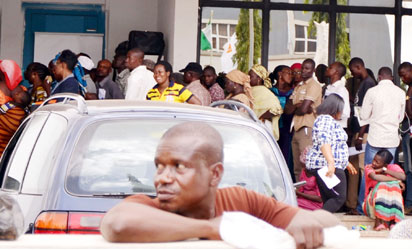
Customers besiege banks as BVN registration deadlines expires
CBN in collaboration with all banks in Nigeria on February 14, 2014, launched the BVN, which is a centralised biometric identification system for the banking industry. It aims at addressing issues of identity theft and fraud and will help to discover blacklisted customers, reduce queues in banking halls and standardise efficiency of banking operations.
The CBN also said the BVN would encourage banks to grant loans to Micro, Small and Medium Enterprises (MSMEs) and students in the country. “One of the most potent arguments advanced by banks for not extending enough credit to prospective credit customers in Nigeria has been the absence of credible identity system. Thus, it was agreed that the scheme would make access to credit easier for low income earners in the society,” the Apex bank said.
The CBN had initially put the deadline of BVN registration at June 30 but postponed it to Oct. 31 because of low enrolment. According to the statement, after 18 month of the exercise, empirical evidence shows that a good number of bank customers are reluctant and have not taken the exercise seriously.
“The emerging statistical trend of the BVN registration exercise shows that there are about 52 million active bank accounts in various banks. Out of this, total enrolment stands at about 20 million, out of which about 14 million accounts have been found linked to the BVN as at September, 2015. The question now is whether bank customers have been taking advantage of the extension to complete their BVN registration and also ensure that their various bank accounts have been linked to the BVN,” it stated.
The statement revealed that after the initial rush from June ending to July, there had been a steady decline in new BVN enrolment figures for August and September. It stated that the development indicated that many bank account holders had continued to show apathy instead of taking advantage of the extension period to complete the registration.
“Bank customers are urged to take advantage of the remaining time to complete the registration. This is so as to avoid the commotion and melee experienced at various banking halls in the month of June. The CBN has made it clear that there would not be further extension after the October 31, 2015 deadline,” the statement said.
It said this meant that customers without the BVN-linked accounts might risk being restricted from normal operations of their accounts or access to their bank account balancesthat for about 52 million  active  bank  accounts  in various  banks,  total  enrolment  stood at about 20 million, out of which,  about 14 million accounts  have been  found  linked to the BVN as at  September, 2015,” the source said.
The CBN,  in collaboration with the Bankers’  Committee,  introduced the Bank Verification Number  (BVN)  on February 14, 2014 to create a unique  identity for all bank customers and other users of financial services in the country by the use of the customers’ biometrics as means of identification.
It was originally meant to last for 18 months, terminating on June 30, 2015. However, at the expiration of the estimated  18  months after the launch,  empirical evidence showed  that a good number of bank customers  were reluctant and  never took  the  exercise  seriously. Thus, few days to the end of the mandatory 18 months,   there was commotion and stampede  in  banking halls across the country,  as customers tried to beat the deadline for  the  BVN registration.
This  confusion  necessitated the call for the extension of the registration dateline by four months to October 31, 2015.  What is required is for bank customers to  visit any branch of their banks and the desk officer  would capture  their finger  print  and  a  photograph of  their face,  their   signatures  and  present a photocopy of  either  a driver’s license, national identity  card or international passport.
One of the excuses by banks for refusing to extend credit to prospective credit customers in Nigeria has been  the absence of credible  identity  system.  Thus, it was agreed that  the scheme would make credit access to  low income earners easier, especially operators of  Micro,  Small and Medium Enterprises, MSMEs, and even students.

Ministerial List: President Buhari appoints self as Petroleum Minister

Anti-Saraki senators protest as 83 senators pass vote of confidence on Senate President

Embattled President of the Nigerian Senate, Bukola Saraki, who is facing trial at the Code of Conduct Tribunal over alleged corrupt practices, got a morale booster Tuesday as 83 of his colleagues gave him a stamp of approval.
Bukola Saraki in the accused box of the Code of Conduct Tibunal
The names of the senators said to have co-sponsored the motion were not read on the floor of the Senate.
But some senators protested the endorsement, saying the processes adopted in moving it were faulty and that the motion violated the upper chamber’s standing rule of not dabbling in matters before a court of law.
David Umaru (APC-Niger East), who read the vote-of-confidence motion, said the proposal was initially sponsored by 84 senators but that the Chairman, Senate Committee on Business and Rules, Babajide Omowarare (APC-Osun East) asked that his name be removed from the list.
In dissociating himself from the motion, Mr. Omoworare said, “Ordinarily, by virtue of my position as the Chairman, Commmittee on Business and Rules, I should have seen this motion before now.
“But it comes as matter of urgent public importance. My name is listed as number 11. Let me say that I don’t know how my name got into the list. I therefore say I am not part of it.”
In spite of the lawmaker’s protest, Mr. Umaru proceeded to move the motion.
He argued that the Nigerian Constitution guaranteed separation of powers and condemned what he described as the “ongoing unwarranted media embarrassment of the Senate and the Senate leadership”.
He urged Nigerians not to allow themselves be used to harass or intimidate the leadership of the Senate.
Supporting the motion, Sani Yerima (APC-Zamfara Central), said “we shall continue to support our leaders”.
According to him, the lawmakers’ right to choose their leadership should be respected.
He added that “anybody outside this chamber who wants to control the Senate should go and sleep”.
The motion was later passed by a voice vote.
But no sooner than that was done that the chamber descended into pandemonium.
Kabir Marafa, a staunch opponent of the embattled Senate President, was so incensed by the motion and the proceedings on the floor that his reaction almost disrupted the session.
He vociferously criticised the motion, arguing that it should not have been entertained in the first place.
Mr. Marafa wondered why issues surrounding Mr. Saraki’s corruption trial was entertained as a motion even while the matter was still pending in courts.
The Senate has a standing rule barring it from discussing matters pending in court.
For minutes, a visibly livid Mr. Marafa engaged Mr. Saraki in heated argument, with both lawmakers talking back at each other.
However, the duo of Senators Gbenga Ashafa and Sola Adeyeye saved the legislative body from what would have been another violent session.
They calmed Mr. Marafa down and then persuaded him to leave the chamber. They then escorted him out of the chamber.
The Nigerian government had last week, on the recommendation of the Code of Conduct Bureau, arrainged Mr. Saraki before the Code of Coduct Tribunal over charges relating to false assets declaration and operation of foreign account while he served as governor of Kwara State between 2003 and 2011.
Mr. Saraki had said in his preliminary statement said he was arraigned and being persecuted because he emerged Senate President contrary to the wishes of his party.

Buhari appoints petroleum minister, to name other ministers Wednesday

President Muhammadu Buhari on Tuesday named Nigeria’s petroleum minister. And that is himself.
Mr. Buhari said he would personally head the Ministry of Petroleum Resources in the new cabinet.
President Muhammadu Buhari first day in Aso Rock ... STATE HOUSE PHOTO
Addressing some select reporters in New York on Tuesday, after addressing a Global Leaders’ Summit on Countering ISIL and Violent Extremism, the President said: “I wil remain Minister of Petroleum.
“I will appoint a minister of State for Petroleum”.
According to him, this step is being taken as part of efforts to sanitise Nigeria’s oil industry, which is said to be plagued by corruption, massive fraud, and crude oil theft.
Mr. Buhari restated his determination to sanitise Nigeria’s oil industry and free it from corruption and shady deals.
He said that the first step in this direction had already been taken with the appointment of a new management for the NNPC and its subsequent reorganisation.
The President said the prosecution of those who misappropriated NNPC’s revenue under past administrations would soon commence.
On Corruption, he pledged that the federal government will fight corruption, because it has been identified as the root of all problems hindering Nigeria as a nation.
Former President Olusegun Obasanjo, for most part of his tenure, was also the minister of petroleum.
Mr. Buhari had promised to name his cabinet before the end of September.
Since Wednesday is the last day of the month, the President is widely expected to forward names of his minister to the National Assembly today.
Names forwarded to the National Assembly would be screened and approved by the Senate before they are sworn in.
Already, the President of the Senate, Bukola Saraki, has indicated that the screening of the ministers would be thorough and comprehensive.
Mr. Saraki gave the hint while welcoming senators to plenary in Abuja after a long recess.
He said that screening of the nominees would be in-depth to ensure that only competent and qualified individuals only occupied the positions.
“As we await the list of ministerial nominees this week, we are prepared to treat the screening with dispatch but with thoroughness,” the Senate President said.
“I believe the presence of ministers will create the space for greater policy engagement with the executive arm of government.
“I want to urge you all my colleagues to ensure that what is uppermost in our minds as we begin the constitutional task of screening of ministerial nominees is the overall interest of our country.”
He added, “Once the list is submitted, let us ensure that we treat it with dispatch and thoroughness. We must not be held down by unnecessary politicking.
“The enormity of our national challenges at this time does not give room for pettiness or politics of vendetta.”

Monday

10 Cars You Should Avoid Buying

SCION IQ

scion-iq


smart-for-two

vauxhall-adam


Chevrolet-Spark


dacia-duster

hyundai_i10


Dodge-Grand-Caravan


mitsubishi-mirage


Mini-Countryman


Volkswagen-Beetle


10 Most Powerful Cars on the Market

Most people like power. You don’t have to be passionate about it, but you have to admit that you prefer having power to being powerless. This simple truth is obvious, and you can find it in everything that surrounds us – even our homes and our toys. Passion for power is obvious when you look at some cars. Here are some of the most powerful cars you can buy today.

Bugatti Veyron EB 16.4 Super Sport

1. BUGATTI VEYRON 16.4 SUPER SPORT

With a 1,200 horsepower engine, Veyron Super Sport will leave every other vehicle on the road in a cloud of dust. Built with a streamlined appearance, it looks like a hunting cheetah. However, it comes with a bad looking price tag – Bugatti has only sold around 435 of these machines, so far. Reaching a top speed of 252.97 miles per hour, this car uses a set of specialized tires that can only be serviced at a shop in France, for $70,000.
La Ferrari .

2. FERRARI LAFERARRI

Sometimes called the F150, Ferrari’s LaFerarri kept the same streamlined look that Ferrari fans have always loved. However, this car is powerful, but eco-friendly; the engine is a hybrid, running on petrol and electricity. That doesn’t take away from it’s power, though; with 950 horsepower under the hood, this monster can reach 186 miles per hour in only 15 seconds. It’s top speed is somewhere around 217 miles per hour. The LaFerrari set records on its test course, finishing the entire circuit in 1 minute and 20 seconds, which is faster than any other vehicle Ferrari has ever produced – any that were road-legal, anyway.
McLaren P1

3. MCLAREN P1

When people think of electric cars, they don’t often think of speed — they usually think of them in terms of envirnoment, as of nice, silent, decent looking cars that are good enough, but not too impressive when it comes to power.  Therefore, McLaren P1 comes as a surprise. With a 903 horsepower engine, P1 is a powerful hybrid with a top speed of 217 miles per hour; if  you remove the inhibitor, it can reach speeds even higher than that. It hits 62 miles per hour in just 2.8 seconds, and 186 miles per hour in 16.5 seconds, which makes it faster than McLaren F1.
Porsche 918 Spyder

4. PORSCHE 918 SPYDER

With 795 horsepower under the hood, this is the fastest spider you’ll find.  Spyder is also a hybrid, much like LeFerrari and P1. However, it offers something neither of the other two has: four wheel drive. The Spyder can reach 60 miles per hour in just 2.2 seconds, and 100 miles per hour in just 4.9. One of the more readily available powerhouses on the market, Spyder can be yours for just $845,000.
Ferrari F12 Berlinetta

5. FERRARI F12 BERLINETTA

F12 Berlinetta has 730 horsepower packed into a V12 engine. It was named the Supercar of the Year in 2012 by Top Gear magazine. This machine can hit speeds higher than 220 miles per hour and go from 0 to 60 in just 3.1 seconds. Part of its power lies in a lower center of gravity and reduced-weight chassis. Multiple variations of the Berlinetta have been created, including  SP America and  F12 TRS, but these variations tend to be one-off models that are much more difficult to obtain than the standard version.
Dodge Charger SRT Hellcat

6. DODGE CHARGER SRT HELLCAT

Capable of delivering amazing 707 horsepower thanks to its great 6.2 liter engine, Hellcat has a top speed of 204 miles per hour. It can reach 60 miles per hour in just 3.7 seconds, making it one of the fastest road-legal cars on the market; however, it comes at a lower price than many other cars on this list, starting at just $59,995. 
LP700

7. LAMBORGHINI AVENTADOR LP700

Lamborghini has long been known for their finesse and their power, and the Aventador model is no exception. With 690 horsepower under the hood and the ability to reach 62 miles per hour in just 2.9 seconds, it is a powerful vehicle. The 217 miles per hour top speed doesn’t hurt, either. In addition, the Aventador possesses the sleek, streamlined look, similar to other Lamborghini models. It is a popular choice despite having less power compared to other supercars.
Ferrari FF.

8. FERRARI FF

Ferrari FF can deliver 651 horsepower, and comes with an additional feature not often seen in tourers: four-wheel drive. Its top speed is 208 miles per hour, and  it can reach 62 miles per hour in just 3.7 seconds. Ferrari FF is available for $300,000, which makes it cheaper than most other supercars. Only 800 Ferrari FFs were produced during the first year.
650 S

9. MCLAREN 650S

McLaren 650S (Spider) is a powerful two-door car with 641 horsepower coming from a 3.8 liter V8 engine. It reaches 62 miles per hour in just 3 seconds flat, and can reach 124 miles per hour in 8.4 seconds. The carbon fiber chassis provides the vehicle with a powerful, yet lightweight frame, allowing it to reach higher speeds in less time. 650S is based on MP4-12C; however, it has roughly 25% different parts which give it 500 ft lbs of torque.
SRT Viper R/T

10. SRT VIPER

As part of the famous Dodge Viper line of vehicles, SRT Viper is a powerful machine with 640 horsepower and the top speed of 206 miles per hour. You can buy it for $459,000; however, there is a limited edition package called the Time Attack package that would cost you additional $16,000.  The package adds another 200 pounds of downforce, making the top speed a little lower – 193 miles per hour, but making the vehicle more aerodynamic than before. An interesting thing to note is that it set the production car lap record in 2013, with 1:33:62.

Saraki: The unfolding drama

YOU know that saying: ‘Be careful what you wish for, because you might get it?’  Well, current Senate President, Bukola Saraki is experiencing that feeling at the moment.
I say ‘current Senate President’ because the way things are going, the fine chap might not be presiding over the Senate too much longer.
How did things get to this sorry pass?  There was (is) a change agenda in the firmament but Saraki got the wrong script.  First, he put himself up for the presidency of the Senate against the expressed wish of his current Party, the All Progressives Congress (APC).  But that wasn’t his main crime.  What the APC found most objectionable was that Saraki used the enemy – the Peoples Democratic Party (PDP) – to accomplish that feat.  He had gone too far.
Additionally, there is real fear in some high quarters of what Saraki and his co-conspirators in the PDP could do if they put their minds to it.  Unwittingly, we have been pitched the politics of one-up-manship and blackmail.  Only a careless President and a crazy ruling political Party will leave its future and fortunes to chance giving the situation in the Senate.  So the APC has been obsessively doing one thing after the other to protect its flank.
Act one, scene one, was to drag Saraki’s wife to the Economic & Financial Crimes Commission (EFCC) in July to answer some nebulous charge of fraud and corruption.  That case is still pending.  Scene two.  The government began formal investigations of various Saraki’s businesses.  This, similarly, is ongoing.  Then one Kennedy Izuagbe, a former director of Societe Generale Bank and the Managing Director of Carlisle Properties and Investment Limited, a Saraki company, was declared wanted by the EFCC.
The latest scene is unfolding now at the Code of Conduct Tribunal (CCT).  The APC has only gone and exhumed a presumably tainted thirteen year old Asset Declaration Form and hung it inelegantly around Saraki’s neck.  Of all the ex-governors in Nigeria and more than a decade after the fact, it’s only been discovered that Saraki may have falsely declared his assets.  We have seen this script before: In October 2011, right in the middle of his transformation into a proper Asiwaju, the PDP and Jonathan dragged Tinubu to the same CCT, placed and displayed him in a newly built, finely polished witness cage.  It was a clumsy attempt to stop Tinubu from becoming the bona fide godfather of Southwest politics.  It didn’t work then.
Now?  Who knows.  Unfortunately for Saraki, and contrary to most legal expectations, the Court of Appeal dealt him a quasi fatal blow.  It unceremoniously told Saraki to go and tango with the CCT.  It is one dance too many.  Saraki is being systematically overwhelmed by his own Party.
Act two would follow shortly enough.  You can bet your lunch money that there would be something else.  We all know the routine: if any government decides to go after you, they’ll find something.  It could be that time when you snuck your girlfriend into the back of the Science block for some dry and inconclusive kiss.  Anything!
So you can see where things are headed for brother Saraki.  It goes without saying that no one wants a Senate President who is entangled in a criminal trial – even his colleagues at the Senate would draw the line at that.  Impeachment could be a real possibility if this hot potato is not handled with delicate care.  Resignation is another dreadful possibility.  All the options available to Saraki appear to be ugly ones.  All that energy and guile of sleeping and hiding out in his car at the National Assembly parking lot are bringing him a different set of results today.
As these things go, Saraki’s pool of friends and supporters is drying out fast.  Monies, in Dollars, no less, are being alleged to have come from APC strongmen to induce Senators to abandon him.  This flies directly in the face of President Buhari’s anti-corruption agenda.  But ‘change’ is at stake here and Saraki is apparently not a part of it.  The worse bit is that Saraki is in danger of seeing his 2019 presidential dream crumble even before the referee blows the whistle.  This is the nature of Nigerian reptilian politics.
But Saraki is a fighter, a survivor.  He wouldn’t have got to where he is today if he wasn’t.  He cut his teeth in ultra-conservative Nigerian politics eons ago.  Surely he would push back against the daunting forces arrayed against him?  A tragic-comedy of ambition and raw power unfolds.  Get your popcorn…
Dr. Michael Egbejumi-David,  a medical  practioneer wrote from London.